How can we maintain trust in society? Don't take bribes – and go for a pint with friends
European countries face not only cyberattacks and acts of sabotage, but also attempts to undermine people's trust in the state, public institutions and one another. The aim of information operations is not necessarily to convince public of a particular lie. “It takes an ecosystem to defeat an ecosystem,” says Andy Pryce of the Center for European Policy Analysis in Washington. He argues that governments, local authorities and civil society all need to be part of the response.
Psychological defence is not about censorship, policing people's thoughts or restricting freedom of speech. Its primary aim is to prepare society for attempts at manipulation and strengthen its ability to withstand them. Magnus Hjort, head of the Swedish Agency for Psychological Defence, explains how this approach works in the podcast Brussels Bites. We also spoke to expert Andy Pryce about the influence of artificial intelligence, the importance of trust and how to prepare for hybrid threats.
Defending society without undermining freedom of speech
“It's actually the collective ability of Swedish society to resist foreign information manipulation and interference,” explains Magnus Hjort, whose agency is tasked with countering these activities. It monitors what foreign actors are doing to Sweden and its allies, while also seeking to strengthen public resilience through training programmes, exercises and research.
In the European context, Hjort identifies Russia as the main adversary. However, information campaigns also originate from countries such as China and Iran.
The Swedish agency does not seek to dictate what people should think or interfere with freedom of expression. “We are safeguarding freedom of speech, freedom of expression and the democratic, open society. That's what we are here for. We will never interfere with the debate in Sweden. You have the right to be anti-government, you have the right to be pro-Russian if that's what you want,” he emphasises.
Instead, the agency's role is to explain how foreign governments and authoritarian regimes weaponise information, exploit social media and organise disinformation campaigns.
One of the newer challenges, according to Hjort, is so-called disinformation as a service. Networks of fake accounts and bots can be purchased from commercial actors in East Asia and used to artificially amplify certain posts or narratives. The situation is further complicated by artificial intelligence. Campaigns have become faster, more sophisticated and easier to produce. The challenge is no longer just to identify fake accounts, but also to establish who is actually behind them.
The aim is to divide society and undermine trust
Hjort illustrates how these operations work in practice with the example of what the Swedish agency calls the Holiday Network. A network of possibly thousands of accounts, purchased from an East Asian commercial actor, presented itself on social media as ordinary users. The accounts shared, for example, information about holidays and football, and their Swedish was remarkably good.
According to the Swedish agency's analysis, however, these were fake identities designed to polarise society. The accounts published both positive and negative posts about crime and migration. The intended effect was to create the impression that Swedish society was much more divided than it actually was.
The aim is not always to persuade people of a particular claim. Sometimes it is more about making them lose faith in the possibility of establishing what is actually true.
Hjort points, for example, to the Russian disinformation surrounding the shooting down of the Malaysia Airlines plane, in which almost 300 people died more than a decade ago. According to him, spreading numerous different versions of events was intended to confuse the public.
“Russia has been spreading so many different explanations in order to make people confused, to make people uncertain. They want us to think that we don't know what is true, that it's impossible to know because there are 50 different explanations. But we know what happened. There was a Dutch investigation that established what happened. It was a Russian missile that shot down the plane,” he says.
“There are certainly instances when they are trying to sway opinions in a particular direction. But they are also trying to make us indecisive, to make us uncertain about which course of action is the right one,” Hjort explains.
Andy Pryce, from the Center for European Policy Analysis in Washington, also stresses the importance of trust. According to him, the Kremlin views the relationship between Russia's strength and the resilience of European societies as a zero-sum game. The more divided Europe becomes, and the less people trust institutions or one another, the harder it is for European countries to defend themselves – and the stronger Russia becomes.
Trust in institutions also plays an important role in people's willingness to defend their own country. Research into the willingness to resist, Pryce points out, suggests that confidence in government and its competence is one of the factors shaping both citizens' and soldiers' readiness to defend their country.
Not every piece of disinformation deserves attention
So how should society respond to such campaigns? According to Hjort, it is not always best to respond to every false post or claim. Sometimes addressing it can give it far more attention than it would otherwise have received.
“Sometimes it's best to do nothing, because a lot of this information doesn't go anywhere. Russia produces so much disinformation that it simply passes by without anyone actually paying attention. In those cases, it's best not to do anything. Don't mention it,” he explains.
In other situations, however, a response is essential. As an example, he mentions a campaign by influencers targeting Swedish social services. They claimed that the authorities were deliberately taking children away from Muslim families without legal grounds. In such cases, Hjort says, the response must come primarily from the institutions actually responsible for social services, both at local and national level.
Long-term defence, however, cannot work without building trust within society. According to Hjort, Sweden is a country with relatively high levels of public trust. He estimates that around 70 to 80 per cent of the population are high-trust individuals. But this cannot be taken for granted.
“Society has to deliver, of course. We have to deliver on the things we are supposed to do for our people,” he says.
It is also important, he argues, to ensure that nobody feels excluded, to build trust in communities where it is lacking and to make institutions operate transparently. Corruption is a major obstacle because it undermines public trust.
Citizens themselves also have a role to play. Hjort recommends checking sources, especially when encountering a news item that triggers fear or anger. People should look at whether other media outlets are reporting the same story before sharing or liking it.
The whole of society is a potential target
According to Andy Pryce, European countries are not equally prepared for hybrid threats. He rates their resilience somewhere between three and six or seven out of ten, with Finland and Estonia potentially scoring even higher.
The United Kingdom also has experience of hybrid attacks. According to Pryce, its institutions are relatively well prepared for crises at central-government level, but communication and trust between the public and the state remain a problem. What is particularly lacking is the infrastructure needed for communication at local level.
Hybrid threats do not necessarily take the form of a major military attack or a large-scale cyber operation. Everyday life can be disrupted through much smaller interventions.
“You can hack traffic-light controls to cause chaos in a city during rush hour, blow up an ammunition factory or send out emails saying that schools are closed today, simply to disrupt people and catch them off guard,” Pryce warns.
Smaller disruptions, or a series of incidents, are precisely the kind of threat he identifies for both the United Kingdom and the Czech Republic. Their purpose may not be to cause significant material damage, but rather to trigger panic and influence the way people think.
“We are not suddenly going to have a land war affecting our countries, but we do have these attacks taking place and we need to be resilient to them,” Pryce says. He identifies undermining European support for Ukraine as one of the main objectives of Russian operations, alongside attempts to persuade Western countries to devote a greater share of their defence budgets to domestic defence and less to supporting Ukraine.
Resilience is also built through personal connections
One possible solution, according to Pryce, is the creation of local resilience hubs. He has proposed establishing them in all 119 towns and cities in the UK above a certain size. They could bring together local authorities, schools, voluntary organisations such as the Scouts, and local journalists.
Such centres should not only prepare residents for crisis situations, but also provide opportunities for people to meet and get to know one another. When members of a community know each other, they can more easily recognise whether someone posting in a local social media group is actually from the area or is using a fake identity.
Another benefit, Pryce argues, is that public officials would have more direct contact with the people affected by their decisions. They could better understand local needs and the consequences of their own policies. In this way, trust is built in both directions.
Hjort also emphasises the importance of educating younger generations. The Swedish agency works with schools, teachers, a museum focusing on information literacy and around twenty youth organisations through an initiative called the Youth Resilience Hub. The aim is to help children and young people learn how to check sources and navigate the information environment more effectively.
Pryce also points out that society may not be as divided as it appears from debates on social media. Algorithms tend to reward shocking and confrontational posts, thereby distorting people's perception of public debate.
“If you go to a pub with someone, get a good pilsner and sit down for a chat, without trying to convince them of your point of view or sell them anything, and simply talk about life, you'll find that you agree on 90 or perhaps 95 per cent of things. There are only five per cent on which you disagree. And that's perfectly normal,” he says.
Personal encounters, open conversations and building trust in everyday life are therefore important elements of defending society against manipulation. In communities where people know one another and are able to talk, it is much harder to artificially divide society.
Nejposlouchanější


Více z pořadu


E-shop Českého rozhlasu
Vždycky jsem si přál ocitnout se v románu Julese Verna. Teď se mi to splnilo.
Václav Žmolík, moderátor

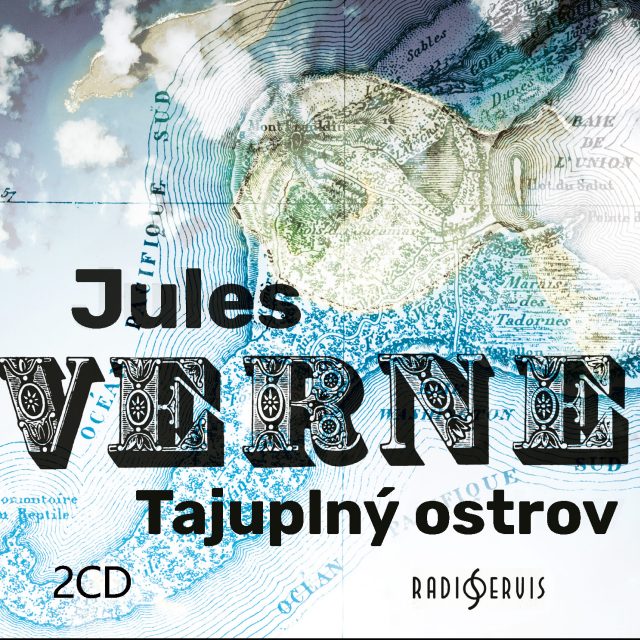
Tajuplný ostrov
Lincolnův ostrov nikdo nikdy na mapě nenašel, a přece ho znají lidé na celém světě. Už déle než sto třicet let na něm prožívají dobrodružství s pěticí trosečníků, kteří na něm našli útočiště, a hlavně nejedno tajemství.



Zprávy z iROZHLAS.cz
-
OVĚŘOVNA: Změní pražská ulice Dukelských hrdinů název? Magistrát žádný podnět nedostal
-
Zůstává vyplacená ze státní kasy. Soud začne rozplétat 100milionovou dotaci na lepší toustový chléb Penam
-
Střelba na náměstí v Krakově si vyžádala 6 mrtvých a 15 zraněných. V domě útočníka se našla tři těla
-
Švýcaři se přidali k bojkotu ruských hokejistů. Hráči do 20 let proti nim na mistrovství světa nenastoupí


